Loading...
Serving Hybla Valley, VA and surrounding areas. (571) 788-4635
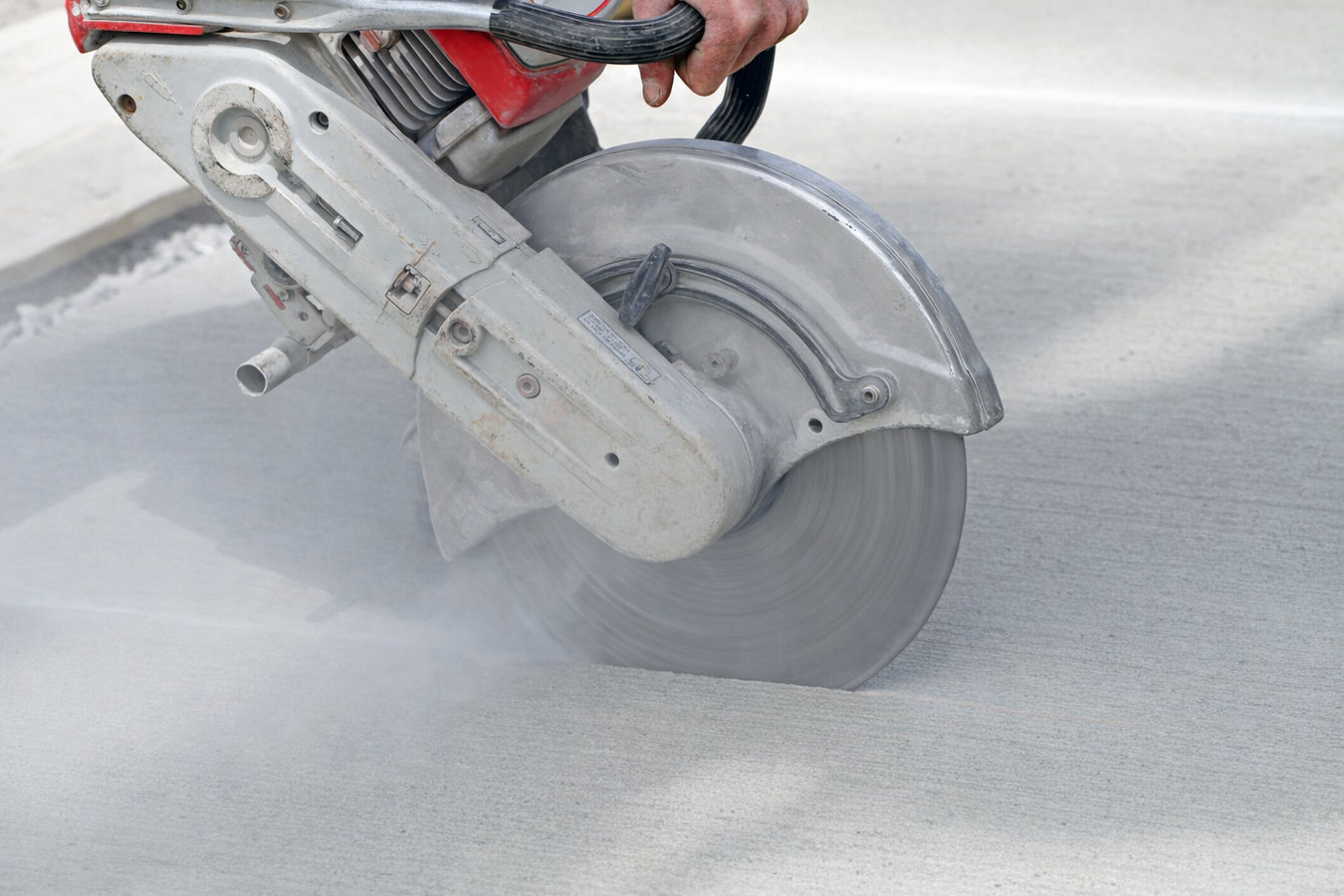
Cracked driveway panels, utility trenches, basement wall openings - we cut concrete precisely so the surrounding slab stays intact and your project moves forward without setbacks.
Concrete cutting in Hybla Valley uses diamond-tipped saws to slice through hardened concrete cleanly and precisely - for a standard job like removing a cracked driveway panel or cutting a trench for a utility line, most residential work is completed in a single day and costs roughly $5 to $10 per linear foot for slab cuts.
The main reason homeowners in Hybla Valley call for concrete cutting is damage that has gone past the point of patching. In this area, that damage usually starts with freeze-thaw cycles working on cracks each winter, combined with the clay-heavy soil shifting under the slab from below. Once a crack is wide enough to catch a toe or the panel has heaved significantly, patching over it just delays the next repair. Cutting the damaged section out completely - and correcting the base material before the new pour - breaks that cycle. If you are dealing with a settled slab that is structurally sound but just needs to be lifted rather than replaced, our concrete driveway building and concrete parking lot building services handle full replacement work after a section is removed.
Before any cut that involves ground disturbance, we contact Virginia 811 to have underground utility lines marked at your property. This is required by Virginia law and protects your gas, water, and electrical lines. It is part of our standard process on every job.
If your driveway cracks seem a little wider or longer each year after winter, that is the freeze-thaw cycle at work. In Hybla Valley's climate, water gets into small cracks, freezes, and forces them open a little more each season. Once a crack is wide enough to catch your toe or let weeds grow through, the damaged section needs to be cut out and replaced rather than patched over.
If part of your patio, driveway, or walkway is noticeably higher or lower than the section next to it, the clay-heavy soil underneath has shifted. This uneven surface is a trip hazard and usually cannot be fixed by grinding alone - the affected panel needs to be cut out cleanly so the base can be corrected and a new section poured level.
If you are planning to run a new water line, electrical conduit, or drainage pipe under an existing slab, or if you want to open up a basement wall for a new entry, concrete cutting is how that opening gets made cleanly. Trying to break through concrete with a sledgehammer leaves ragged, unpredictable edges that make the next steps of your project harder and messier.
If the surface of your driveway or patio looks like it is flaking off in layers or has deep pits that collect water, the concrete has deteriorated past where a surface sealer will help. This kind of damage - common in older Hybla Valley slabs that have been through decades of freeze-thaw cycles - means the affected sections need to be cut out and replaced with fresh concrete on a corrected base.
We handle flat slab cutting for driveway and patio panel removal, utility trench cutting to open an existing slab for new lines, wall and foundation cutting for doorway openings and utility penetrations, and expansion joint cutting to control where future cracks form. Every job starts with Virginia 811 utility marking and a site assessment to confirm the right blade and technique for your slab thickness. We use wet cutting throughout to suppress concrete dust and control silica exposure - this is standard practice and what the Occupational Safety and Health Administration recommends for protecting workers and residents during concrete cutting work.
If your project involves cutting to prepare for new concrete flatwork, our concrete driveway building service handles the replacement pour after the old section is removed. For commercial paving or larger flatwork, our concrete parking lot building service covers that scope. We often do both the cut and the pour as a single project - call us and we can explain what that looks like for your specific situation.
Best for removing cracked or heaved driveway, patio, and walkway panels so a new section can be poured on a corrected base.
Best for homeowners adding a new water line, drainage pipe, or electrical conduit under an existing concrete slab.
Best for basement wall openings, new doorways, and utility penetrations that require a clean, precise opening through concrete.
Most of Hybla Valley was developed between the 1950s and 1970s, which means a lot of the concrete flatwork here is 50 to 70 years old. Slabs from that era were often poured thinner than today's standards and without the rebar reinforcement that modern concrete work requires. Decades of Fairfax County's freeze-thaw winters - temperatures dipping below freezing on 60 to 80 nights a year - have worked on those older, thinner slabs every season. Combine that with the expansive clay soil that shifts underneath, and it is not unusual for concrete cut in 1965 to need professional removal and replacement today. The Concrete Sawing and Drilling Association sets the training and safety standards for concrete cutting professionals, and contractors who follow those standards adjust their technique for older, thinner slabs rather than treating every job the same.
Hybla Valley is also a dense suburban neighborhood with small lots and tight driveways, which affects how cutting equipment reaches the work area. Large truck-mounted saws may not access certain areas of your property - experienced local contractors know how to work in these conditions with walk-behind equipment. We work throughout the Route 1 corridor and surrounding communities, including Franconia and Springfield, where the same combination of aging housing stock and limited equipment access makes local experience especially valuable.
We ask a few basic questions - what you are trying to accomplish, roughly how much concrete is involved, and whether there are access challenges at your property. We respond within 1 business day and schedule a free on-site estimate rather than quoting blind over the phone.
We walk the concrete, check the thickness, and assess how equipment will reach the work area. We tell you upfront whether your project requires a Fairfax County permit. You leave the estimate with a written quote that spells out exactly what is included - cutting, debris removal, and cleanup.
We contact Virginia 811 to have underground lines marked before any cutting starts - this is required by Virginia law and takes a few business days. If your project needs a Fairfax County permit, we handle the application before scheduling work. No cutting happens until both steps are done.
The crew arrives, sets up a work zone, and begins cutting using wet saws that keep dust controlled. Most residential jobs are finished in a single day. Before packing up, we walk the finished cuts with you and confirm the next steps - whether that is a replacement pour, a utility installation, or something else entirely.
Free on-site estimates. Utility marking and permits handled. We respond within 1 business day.
(571) 788-4635We contact Virginia 811 before every job that involves ground disturbance. This is required by Virginia law, and it protects your gas, water, and electrical lines. It is not an upsell or an add-on - it is part of our standard process. A contractor who skips this step is not someone you want working at your property.
Older Hybla Valley slabs are often thinner and unreinforced compared to modern pours, which means the cutting approach has to account for that. We use the right blade for the job - not a one-size approach - which is what prevents chipping and micro-cracks in the surrounding concrete. The finished cut should be straight, clean, and consistent in depth.
We tell you upfront whether your project requires a Fairfax County permit and handle the application if it does. You never have to navigate the county process yourself, and no cutting starts until the permit question is resolved. Fairfax County Department of Planning and Development oversees building permits for work in this area.
Hybla Valley lots are small and driveways are often tight. We have experience working in confined residential spaces with walk-behind equipment when larger machinery cannot reach. Your yard, fence line, and garden beds stay protected throughout the job - we do not treat every site the same way.
Concrete cutting done right leaves a clean edge, an undamaged surrounding slab, and a site that is ready for the next phase of your project. That is the standard we hold every job to, whether it is a single panel or a full trench across your driveway.
Once the damaged section is cut out, we pour a new driveway panel on a corrected base that will hold up through Northern Virginia winters.
Learn MoreFor larger commercial flatwork that requires cutting and replacement across a full parking surface.
Learn MoreContact us now to lock in your concrete cutting estimate before the busy season starts and schedules fill up.