Loading...
Serving Hybla Valley, VA and surrounding areas. (571) 788-4635
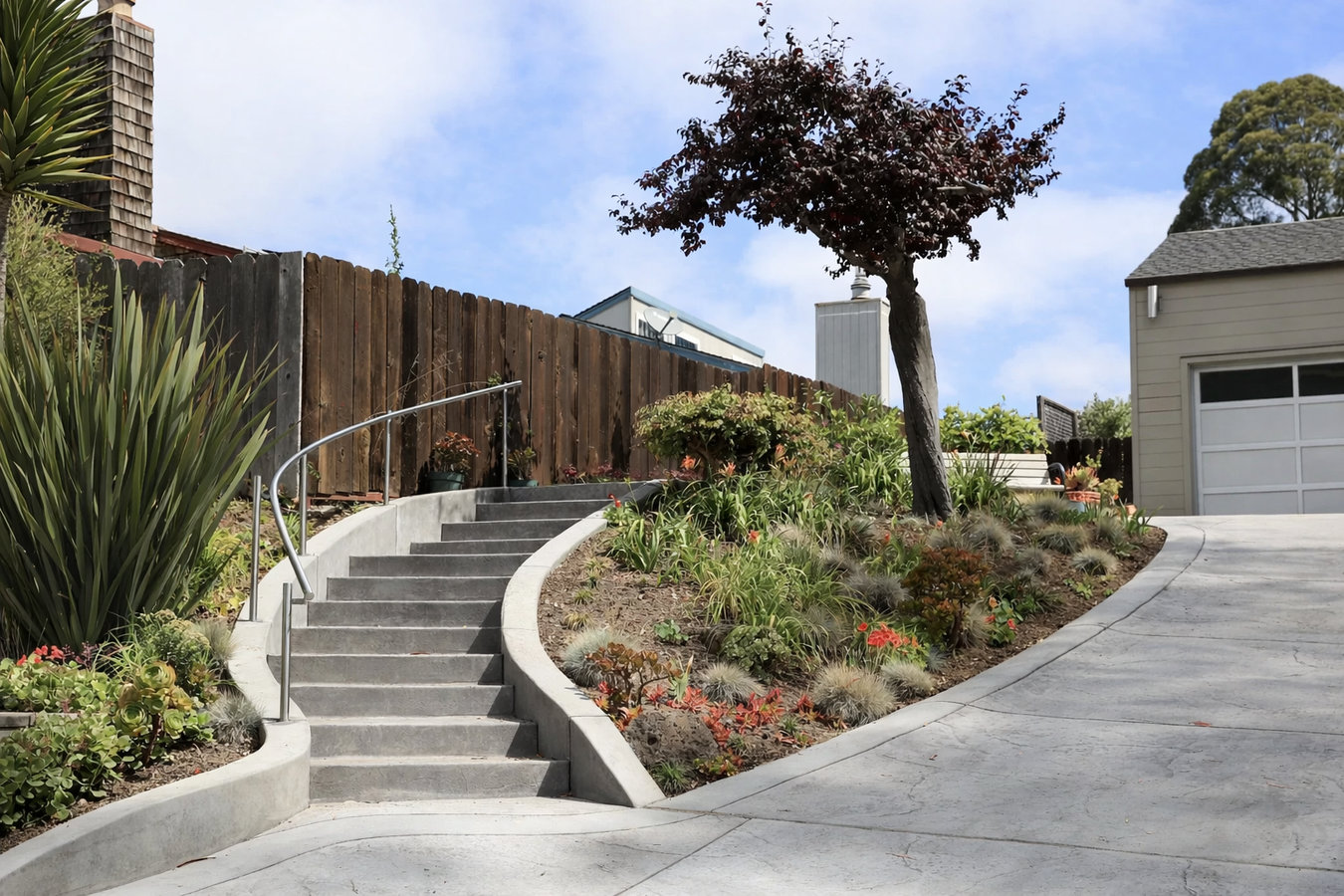
Cracked, tilting, or spalling entry steps are a safety hazard and a curb-appeal problem. We build custom poured concrete steps that fit your home and hold up through Northern Virginia winters.
Concrete steps construction in Hybla Valley means building a custom form, compacting the base with a gravel drainage layer, pouring the concrete, and finishing the surface for grip and drainage - most residential jobs take one to two days of active work, with at least 24 to 48 hours of curing before use.
Most homes in Hybla Valley were built in the 1950s and 1960s, and their front entries rarely match standard precast step dimensions. That is why poured-in-place steps are almost always the better fit here - they are built to match your specific door height, landing width, and grade. If your project also involves the surrounding walkway, our concrete sidewalk building work pairs naturally with a step replacement.
The most common mistake contractors make on concrete steps is skipping or rushing the base preparation. That is where long-term stability comes from - not from the pour itself.
If you can see cracks wider than a hairline running across the treads or along the edges, the concrete has likely been compromised by freeze-thaw stress - a common result of Northern Virginia winters. Small surface cracks can sometimes be patched, but cracks that go all the way through or are getting wider usually mean the whole structure needs replacement.
If your steps shift when you step on them, or you can see they have pulled away from the house or tilted to one side, the base beneath them has shifted. In Hybla Valley's clay-heavy soil, this is common in older steps that were not built with proper drainage underneath. A tilted step is a fall hazard that should not be ignored.
When the top layer of concrete starts to peel off in thin flakes or crumble at the edges, that is called spalling. It is often caused by years of de-icing salt use combined with freeze-thaw cycles - a combination very common in Fairfax County. Once spalling starts, it tends to accelerate, and patching rarely holds on steps that see daily foot traffic.
Properly built steps are slightly sloped so water runs off the front edge. If you notice puddles sitting on your steps after it rains, the slope is wrong - either from the original pour or from settling over time. Standing water freezes in winter, creating a slip hazard and speeding up surface damage.
Most of our concrete steps work in Hybla Valley is front entry stoop replacement - old steps that have cracked, tilted, or settled so far that patching no longer makes sense. We tear out the old concrete, prepare the base properly, and pour custom steps sized to fit the specific entryway. For homeowners thinking about adding decorative character to their entry, slab foundation building and complementary flatwork can be discussed during the same estimate visit.
Whether you want a plain broom finish that is practical and safe in any weather, or a stamped finish that adds curb appeal, we can accommodate either. Every step we build gets the same base preparation and concrete mix - the finish is your choice, but the structure underneath is not negotiated.
Best for Hybla Valley homes with non-standard entryways - custom-sized to fit your specific door, landing, and grade.
The most practical finish for steps - textured, slip-resistant, and priced well for straightforward projects.
Good for homeowners who want curb appeal alongside durability, with a finish that can match existing exterior materials.
A full tear-out and replacement of an old, cracked, or settling front entry stoop - the most common request in this neighborhood.
Hybla Valley's housing stock is mostly postwar - homes built between 1950 and 1975 that are now 50 to 70 years old. The original concrete steps on those homes have been through decades of freeze-thaw cycles, and many have been patched and re-patched until patching is no longer a realistic option. The clay-heavy soil under those steps shifts with every rain and every dry stretch, which is why so many of them have tilted or cracked from below. Contractors who pour steps in this area need to account for both the climate and the soil conditions - not just the surface.
We work in Hybla Valley and throughout the surrounding neighborhoods, including Rose Hill and Groveton, where the same postwar housing stock and clay soil conditions apply. We know what base preparation looks like in this soil, and we know what Fairfax County's permit office expects to see on inspection.
Tell us what you need - new steps, a replacement, or a repair. We will schedule a time to come look at your entry in person, because step dimensions, site access, and soil conditions all affect the cost. We reply within one business day.
We measure your entryway, check the existing steps if there are any, and assess the ground underneath. We explain what we see, discuss your finish options, and give you a written proposal that breaks down all costs - no phone estimates, no surprises.
If your project requires a Fairfax County building permit - typical for steps attached to the home - we handle the application. Permit processing can take a few days to a couple of weeks. Once approved, you get a start date and a weather check before the pour.
We remove old steps and haul away the debris, then compact the soil and lay a gravel base for drainage and stability. The pour and finishing happen in a few hours. Before we leave, we walk the steps with you and tell you exactly how to care for the new surface through the first winter.
We come to your Hybla Valley home, measure your entry, and give you a written quote you can actually compare. No obligation.
(571) 788-4635Most Hybla Valley homes were built before standard precast step sizes became common. We pour steps to fit your specific entryway - not forced into dimensions that almost work. Steps that fit look like they belong there, because they were made for that exact spot.
Compacting the soil and laying a gravel drainage layer is the step most contractors rush. In Hybla Valley's clay soil, skipping it means your steps crack or tilt within a few years. We do it every time - it is the part that determines whether your steps last 10 years or 40.
We apply for the required building permit before any work starts. You get documentation showing the work was inspected and approved - which matters when you sell your home and when your insurance company asks questions. Virginia contractor licensing and permit requirements are set by Virginia DPOR.
Concrete should not be poured when temperatures are expected to drop below 40 degrees within 24 hours - and in Northern Virginia that is a real scheduling constraint. We check the forecast before every pour and follow American Concrete Institute cold-weather protocols to protect the cure and give your steps the best start possible.
These are not marketing points - they are the specific things that determine whether your new steps look the same in 10 years as they do when we finish the job. We are proud to do them consistently.
If your steps are connected to a settling slab or damaged foundation area, slab work often needs to happen alongside a step replacement.
Learn MorePair new entry steps with a freshly poured concrete walkway for a complete curb-appeal upgrade at your Hybla Valley home.
Learn MoreSpring slots fill up fast in Fairfax County - reach out now and lock in your date before the rush begins.